
Initially, blogging used to be more like a hobby—writing texts about personal experiences and whatever comes to mind. Today, it’s part of the marketing strategy for online businesses.
But why? Is it because blogging helps your search engine optimization (SEO) efforts?
The short answer is Yes.
I’m Nikola Baldikov—I’ve been doing SEO for the past ten years, and I can confirm that publishing regular blog posts improves your SEO rankings.
In this article, I explore how blogging helps SEO and what you can do to make your blog thrive.
Key Takeaways
- Quality blogs can generate up to 97% more inbound links, improving your SEO.
- Every new blog post is considered a new page. That’s why blogs create 434% more indexed pages than websites without blogs, increasing your site’s visibility.
- Regular blog posts keep your website updated, helping it rank higher in search results.
- Using long-tail keywords in blogs helps attract the right audience and improves search rankings.
- Engaging blog content keeps visitors on your site longer, signaling value to search engines.
What Is Blog SEO?

Blog SEO is about making your blog stand out more on search engine results pages (SERPs) by improving its content and design.
When done right, blog SEO can naturally increase your traffic. It involves various tactics, such as:
- identifying the right keywords
- creating engaging content
- optimizing your blog’s elements to appeal to both search engines and readers
Publishing quality and educational materials along with offering a streamlined user experience doesn’t only improve your site’s reputation. Such efforts also encourage visitors to stay longer, which reduces bounce rates and therefore benefits your SEO. Plus, these engaged visitors are more likely to convert.
How Blogging Helps SEO
I’ve learned from experience that SEO and blogging are deeply connected. They are essential for reaching more customers and improving your online presence.
Here’s how blogging helps on-page SEO:
Fresh content keeps your website relevant
One of the best ways to keep your website relevant is by adding fresh content regularly. Search engines love sites that update frequently, and blogging gives you the perfect opportunity to do just that. Sites with blogs generally have more indexed pages, which means more content for search engines to show.
When I started blogging, I noticed that every new post helped with my site’s online visibility. Search engines crawled my site more often, and before I knew it, my rankings started moving up.
Blogging drives organic traffic
Regular blogging can be a serious traffic magnet. The more blog posts you create around relevant topics, the more chances you have to attract visitors from search engines.
For example, when I wrote about specific questions my target audience was asking, it naturally brought more organic traffic to my site. That’s the beauty of blogging for SEO—it’s not about stuffing keywords into your content but creating posts that truly provide value to your audience.
Another perk of increased traffic is streamlining your activities in blog advertising, including pay-per-click advertising and affiliate marketing.
Itamar Haim, shared how he helped grow the traffic to Elementor’s blog from 30k to 60k in only five months.
“First off, we have been adding consistent content. Six months ago we only had 746 pages, and last month at our peak traffic we had 1,029 pages. We put out a lot of content that resonates with our target customers, like resource pages, entrepreneurial recommendations, and more. Putting out statistics blog content helped us get backlinks from DR [Domain Rating] 90 sites. I think having industry-leading case studies and stats is a surefire way to get more backlinks.”
Blogging helps with link building
Blogging is a great way to attract backlinks from other websites as well. Whenever I create high-quality, informative content, other sites tend to link back to it. These backlinks are pure gold for SEO. They show search engines that your site is a credible resource, which helps improve your authority and rankings.
If you’re curious about how to get more backlinks, the answer is simple: write valuable content. People naturally link to posts that offer something insightful or unique.
“Don’t expect people to link to a blog that doesn’t say anything new—you must frame your content around what others value rather than self-promotion or SEO alone. Actively promote your content and reach out to other thought leaders or influencers, and your great content will start to build a following.” — Elisa Montanari, Head of Organic Growth, Wrike
Check out my guide to manual link building to learn other effective backlink techniques.
Key SEO Blogging Strategies
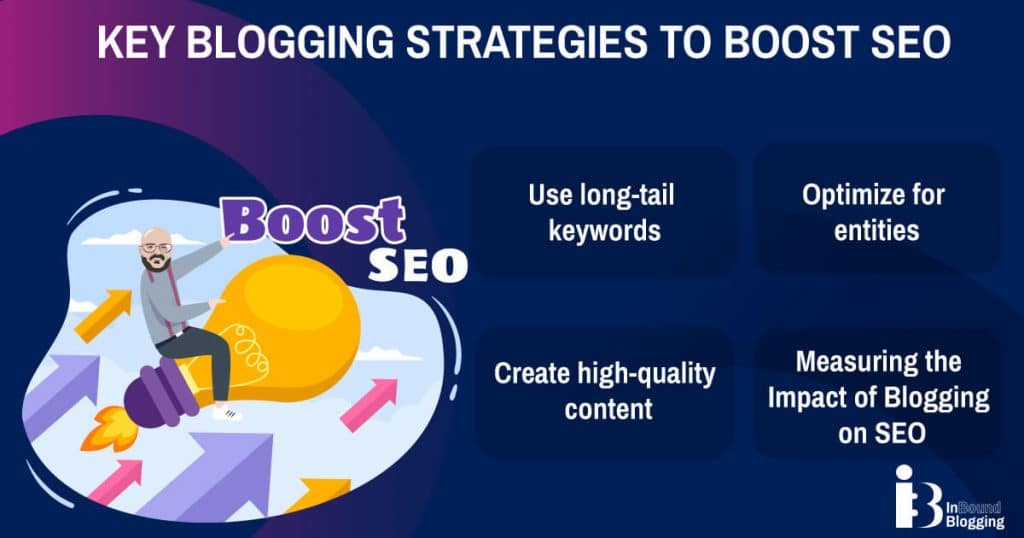
If you want your blog to really help with SEO, there are a few key strategies you’ll want to focus on.
Use long-tail keywords
I can’t stress this enough: use long-tail keywords. These are specific phrases that people search for, and they’re great for capturing more targeted traffic.
Instead of going after general keywords with a large search volume, like “SEO tips,” I focus on long-tail phrases like “how does blogging help SEO.” By including these long-tail keywords naturally in my posts, I reach a more specific audience, and my blog stands a better chance of ranking higher in search results for those queries.
“We once worked with an insurance company that was looking to improve its online visibility. To achieve this, we created a series of blog posts about digital tools that help speed the process of filing insurance claims, with lots of examples from our clients.
We used long-tail keywords, such as ‘digital claims tools for insurance companies’. A few months later, we saw tangible results when the website of the company started ranking higher in search engine results.” — Marta Romaniak, VP of Global Branding, Avenga
Optimize for entities
An entity is a distinct, identifiable concept or thing that can be recognized and understood by search engines. This can include people, places, organizations, or concepts.
Optimizing for entities helps search engines understand what your blog is about, so it shows up in more relevant searches. This helps your SEO and attracts the right readers.
“The concept of entities is difficult to grasp, but it’s really not that complicated. Words often have multiple meanings, so disambiguation can often be critical to helping search engines understand what your content is about.
Lincoln is both a city in Nebraska and the last name of one of the US’s most famous presidents. Which Lincoln exactly is your article discussing? By tying together different entities, you help increase the confidence of search engines with your topic.” — Travis Fisher, Executive Vice President, Inacom Information Systems
Create high-quality content
It might seem obvious, but creating quality blog content is at the heart of good SEO.
Think of each blog post as an opportunity to provide something valuable to your readers—whether it’s answering their questions, solving a problem, or offering fresh insights. The more valuable your content is, the more likely readers will stay on your site, engage with it, and share it.
One thing I’ve learned is that writing for both humans and search engines is a balancing act. You want to include keywords strategically but never at the expense of readability.
“Organizing content into topic clusters with a pillar page helps structure your content in a way that search engines can easily understand. Align your content with search intent—educational blogs for awareness and in-depth guides for conversion-ready visitors. This makes your content more likely to match user queries and drive organic traffic.” — Emelie Linheden, VP of Marketing, Younium AB
Optimize for mobile and speed
With so many people browsing on their phones, optimizing your blog for mobile is a must. SEO statistics show that 52% of people are less likely to interact with a company if its mobile navigation is poor.
If your blog doesn’t load quickly or look good on mobile devices, you’re going to lose readers—and search engines will notice.
I make sure my blog is mobile-friendly and loads fast by:
- compressing images
- using clean code
- choosing a reliable hosting service
PageSpeed Insights is a helpful tool for checking how well your site performs.
Measure the Impact of Blogging on SEO
It’s important to track how your blogging efforts are impacting your SEO.
Tools like Google Analytics and Google Search Console are perfect for this.
I also use other blogging tools, such as Semrush and Ahrefs, to monitor traffic, individual blog posts’ performance, and keywords that bring the most visitors.
Metrics like bounce rate, time on page, and backlink growth are important indicators of how well your blog is contributing to your SEO goals. The better these metrics are, the better your blog is doing in helping your overall SEO.
Final Thoughts
So, does blogging help SEO?
Yes. Blogging gives you a platform to create valuable content that people and search engines love.
It’s one of the most effective ways to improve your search rankings, attract organic traffic, and build trust and authority in your niche. If you’re not already blogging regularly, now’s the time to start.
By focusing on excellent content, using the right keywords, and keeping your blog optimized for mobile and speed, you’ll see a positive impact on your SEO over time.
FAQ
How does SEO blogging help my online business?
Blogging offers a great way to create content that shows search engines relevant information. Sharing images along with your articles helps with your image SEO, i.e., better visibility in Google Images. Furthermore, distributing your blog posts on social media and other channels leads to increasing your follower base, attracting new leads and customers, and eventually, building a solid business reputation in your industry.
What are some SEO best practices for writing blog posts?
Some SEO best practices for writing blog posts include using relevant keywords, optimizing your headings and meta descriptions, ensuring your content is engaging, and including internal linking to other blog posts or pages on your site. You should also use visuals, break up longer text with headings, and encourage interaction through comments or social media sharing.
Does updating my old blogs impact my site’s SEO?
Yes. Updating older or outdated blogs can significantly affect your site’s SEO performance, as fresh, up-to-date information attracts more traffic and shows search engines that you’re consistently providing valuable insights. This “trains” the search engines to crawl and index your site more often, thus boosting your chances of ranking higher on search engine results pages.
How does content for search engines differ from regular blogging?
Content for search engines is specifically focused on including keywords and phrases that align with search engine algorithms, whereas regular blogging may focus more on storytelling or sharing personal experiences. Despite the different strategies, both should aim to provide value to the reader.